FotoFinder alternatives: an honest guide for clinics that need the documentation, not the hardware
By Imaginos Team · Published on July 8, 2026
The main alternatives to FotoFinder are software-first platforms that standardize capture, organize images by patient and region, and compare visits over time using the dermatoscope or camera a clinic already owns. Imaginos (trichology-first, PT/EN/ES, published pricing), DermEngine (dermatology, quote-based) and TrichoLAB (hair analysis service) each cover part of FotoFinder's scope without the proprietary-hardware investment; FotoFinder remains the reference for large centers that want an integrated hardware-plus-software system.
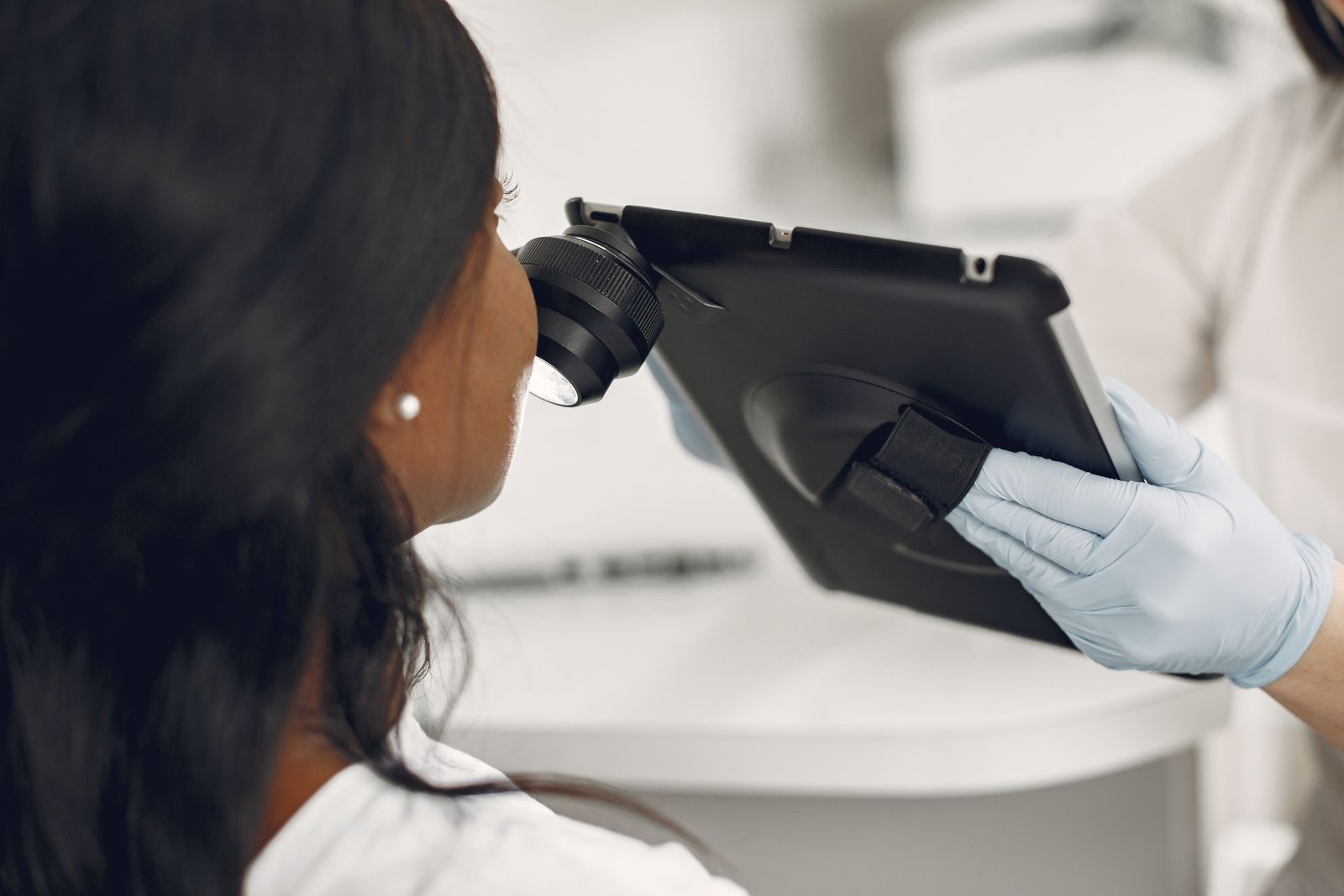
FotoFinder is, deservedly, the name most clinicians think of first in dermatology and trichoscopy imaging. It is also a premium, integrated hardware-plus-software system: proprietary cameras and towers, the Universe software suite on top, and a price quoted per configuration rather than published.[1] For a large reference center running hundreds of automated total-body exams a month, that model makes sense. For a clinic whose real, daily need is standardized documentation and reliable before/after comparison, it often doesn't — and that is the honest starting point of this guide.
Most of the value in clinical imaging is not in the optics. It is in the structured data around the image: capturing the same regions the same way at every visit, organizing photos by patient and region rather than in folders, and putting T0 and T1 side by side so change is visible instead of remembered. That layer is software — and it works with the dermatoscope, smartphone or camera your clinic already owns.
Why clinics look for a FotoFinder alternative
Three reasons come up again and again:
- The investment doesn't match the need. FotoFinder is sold as configured systems — camera or tower plus software modules — with pricing available on request.[1] A recent peer-reviewed survey of AI hair-analysis tools puts it plainly: "professional-grade AI diagnostic systems remain costly and primarily available to large clinical practices."[4] If your practice needs documentation and follow-up rather than automated total-body dermoscopy, most of that investment buys capability you won't use.
- Hardware lock-in. The photos, the workflow and the analysis live inside one vendor's ecosystem, tied to that vendor's devices. Clinics that already own a good dermatoscope — or capture macro photos with a phone — want software that adapts to their equipment, not the reverse.
- Language and locality. FotoFinder is a German system distributed worldwide; day-to-day use, support and data-protection posture are not built around Portuguese- or Spanish-speaking clinics, nor around LGPD specifically.
What FotoFinder does well — and when it's the right call
An honest comparison starts here. FotoFinder Universe unifies digital dermoscopy, automated Total Body Mapping and hair evaluation in one platform, with mature tools like Moleanalyzer pro for lesion analysis and Bodystudio for whole-body documentation.[1] On the hair side, TrichoScale DX (by TrichoLAB) computes density, hair count and anagen-telogen ratio automatically, and FotoFinder's trichoscopy line advertises full hair-parameter capture "without any shaving or plucking."[2]
If your center does high-volume melanoma surveillance with automated total-body mapping, or you specifically want the vendor's certified lesion AI integrated with the vendor's capture hardware, FotoFinder is a strong, proven choice — and no software-only platform honestly replaces the automated body-mapping rigs. The question this guide answers is different: what to use when that is not your case.
The software-first alternatives
Imaginos — trichology-first clinical imaging platform (this is us, so judge the claims against the table and sources below). Standardized, protocol-guided capture on any device, images organized by patient and region, longitudinal side-by-side comparison — including of macro photos, not only dermoscopic ones — visual patient reports, full interface in Portuguese, English and Spanish, and published subscription pricing. Automated hair quantification and lesion decision-support are rolling out soon; today the measurement layer is standardization and comparison, and clinical interpretation stays with the professional.
DermEngine (MetaOptima) — the closest philosophical cousin on the dermatology side: "The Most Intelligent Dermatology Platform", software-first, with total-body photography templates, dermoscopy via the MoleScope attachment and visual search.[5] Strong for skin/lesion documentation; hair is not a focus, the interface is English-first, and pricing is quote-based.
TrichoLAB — not a platform but a specialized hair-analysis service and toolset from Warsaw: trichoscopy analysis, research support and the 3D Transplanner for transplant planning, with over a million trichoscopy images processed.[3] Excellent when you want expert-grade hair metrics or transplant planning; it complements rather than replaces a documentation platform.
TrichoScan — the veteran of computerized trichograms ("the world's first digital system for computerized trichograms"), used heavily in research; recent versions reduce the old trimming-and-dyeing burden.[7] A measurement instrument more than a clinic workflow.
On the Canfield side, HairMetrix competes with FotoFinder's hair analysis (we compare it in depth in HairMetrix alternatives) and VECTRA WB360 with its total-body mapping[8] — both, like FotoFinder, sold as hardware systems. See Canfield alternatives for that side of the market.
Feature-by-feature: trichoscopy and hair follow-up
| ImaginosSoftware-first platform | FotoFinderPremium integrated platform (+ hardware) | Canfield HairMetrixAI trichometry system (+ camera) | TrichoScanHair analysis software (phototrichogram) | |
|---|---|---|---|---|
| Works with your device (no proprietary hardware) | Yes | No | No | |
| Standardized, protocol-guided capture | Yes | Yes | Yes | |
| Longitudinal side-by-side comparison | Yes | Yes | Yes | |
| Multi-device capture | Yes | No | No | |
| Automated hair quantification (AI) | Coming soon | Yes | Yes | Yes |
| Lesion benign/malignant support (AI) | Coming soon | Yes | No | No |
| Visual patient reports | Yes | Yes | Yes | |
| Private storage & signed access (LGPD) | Yes | Yes | Yes | |
| Interface in PT / EN / ES | Yes | No |
And on the dermoscopy side
| ImaginosSoftware-first platform | FotoFinderPremium integrated platform (+ hardware) | Canfield VECTRA WB3603D whole-body imaging (premium hardware) | DermEngineSoftware-first dermatology platform | |
|---|---|---|---|---|
| Works with your device (no proprietary hardware) | Yes | No | No | |
| Standardized, protocol-guided capture | Yes | Yes | Yes | Yes |
| Longitudinal side-by-side comparison | Yes | Yes | Yes | Yes |
| Multi-device capture | Yes | No | ||
| Automated hair quantification (AI) | Coming soon | Yes | No | No |
| Lesion benign/malignant support (AI) | Coming soon | Yes | Yes | |
| Visual patient reports | Yes | Yes | Yes | Yes |
| Private storage & signed access (LGPD) | Yes | Yes | Yes | Yes |
| Interface in PT / EN / ES | Yes |
How Imaginos approaches the same problems
Where FotoFinder standardizes by controlling the hardware, Imaginos standardizes with protocol and software — a different answer to the same clinical problem:
- Regions as the organizing concept. Every image belongs to a named scalp or skin region of the patient, so the record reads like an exam, not a camera roll.
- Two families of series. Marker series (a fixed point followed over time) and macro series — so panoramic/clinical photos get the same longitudinal treatment as dermoscopic ones, something the hardware-centric workflow doesn't prioritize.
- Protocols you define. The capture script (which regions, which order, which device) is the clinic's, not the vendor's — and a free-capture mode exists for everything that doesn't fit a script.
- Any device, even several at once. A phone for macro shots and a USB dermatoscope for trichoscopy can feed the same session.
For a deeper look at the technique itself, see what digital trichoscopy is and our guide to the best trichoscopy software.
How to choose
- High-volume skin-cancer screening center, budget for capital equipment → FotoFinder (or Canfield VECTRA[8]) — the integrated automation is the product.
- Dermatology practice, lesion-first, English-speaking → DermEngine is the natural software-first shortlist entry.[5]
- Hair clinic that needs automated density metrics today → TrichoScale within the FotoFinder world,[2] HairMetrix on the Canfield side,[6] or TrichoLAB as a service.[3]
- Clinic (trichology, dermatology or both) that needs standardized capture, organized records and honest before/after comparison — in PT/EN/ES, at subscription cost → that is the case Imaginos was built for, with AI quantification arriving soon.
A practical tip regardless of vendor: run your own capture protocol as the test. Take the same patient, same regions, two sessions — and see which tool makes the comparison effortless. That is the daily job; buy for it.
FAQ
- How much does FotoFinder cost?
- FotoFinder does not publish list prices. Systems are configured (camera, tower, software modules) and quoted per clinic, typically as a capital purchase in the tens of thousands of euros plus ongoing costs — the exact figure depends on configuration and country. That opacity is itself one reason clinics research alternatives: software-first platforms tend to publish subscription pricing you can check before talking to sales.
- Is there a software-only alternative to FotoFinder?
- Yes. Platforms like Imaginos and DermEngine run with the smartphone, camera or USB/phone-mounted dermatoscope you already own. They cover standardized capture, patient/region organization, longitudinal comparison and reports — the workflow layer — without the proprietary camera or tower. What they don't replace is FotoFinder's own hardware line, such as automated total-body mapping rigs.
- Can I do digital trichoscopy without FotoFinder?
- Yes. Digital trichoscopy is a technique, not a brand: any dermatoscope that captures digital images supports it. What a platform adds is standardization — protocols so the same scalp regions are captured the same way every visit — plus organized storage and side-by-side comparison. Automated hair metrics (density, terminal/vellus ratio) still require analysis software such as TrichoScale, TrichoLAB or HairMetrix; on Imaginos, automated quantification is rolling out soon.
- What is the difference between FotoFinder and Imaginos?
- FotoFinder is an integrated hardware-plus-software system: proprietary cameras and towers with the Universe software suite. Imaginos is software-first: it standardizes capture, organizes images by patient and region, and compares visits over time using equipment you already have, with an interface in Portuguese, English and Spanish and published pricing. FotoFinder ships automated hair and lesion AI today; on Imaginos, AI quantification is rolling out soon.
- Is FotoFinder worth it for a small clinic?
- It depends on what you need. If the practice revolves around high-volume skin-cancer screening with automated total-body mapping, FotoFinder's integrated system is hard to substitute. If the day-to-day need is standardized clinical and trichoscopic documentation with reliable before/after comparison, a software-first platform delivers that at subscription cost, using the equipment you already own — which is usually the better fit for small and mid-sized clinics.
- Which FotoFinder alternatives work in Portuguese or Spanish?
- Most imaging platforms in this market are English-first. Imaginos ships its full interface in Portuguese, English and Spanish, and was built under Brazil's LGPD from day one — relevant when patient photos are sensitive health data and the clinic answers to a local regulator.
References
- FotoFinder Universe — the software platform for dermoscopy, hair analysis & AI. fotofinder-systems.com· open access
- Trichoscopy with FotoFinder — hair analysis, history & documentation. fotofinder.com· open access
- TrichoLAB — hair clinic software solutions: 3D planning, trichoscopy & research. tricholab.com· open access
- Nawaz T, Williams G, Yoo J.. Exploring the Advancements and Applications of AI-Powered Hair Analysis Tools. J Clin Aesthet Dermatol, 2026;19(2):58-62· open access
- DermEngine — intelligent dermatology software. dermengine.com· open access
- HairMetrix — AI-driven hair consultation. canfieldsci.com· open access
- TrichoScan — computer-assisted hair and scalp analysis. trichoscan.com· open access
- VECTRA WB360 — whole body 3D imaging system. canfieldsci.com· open access